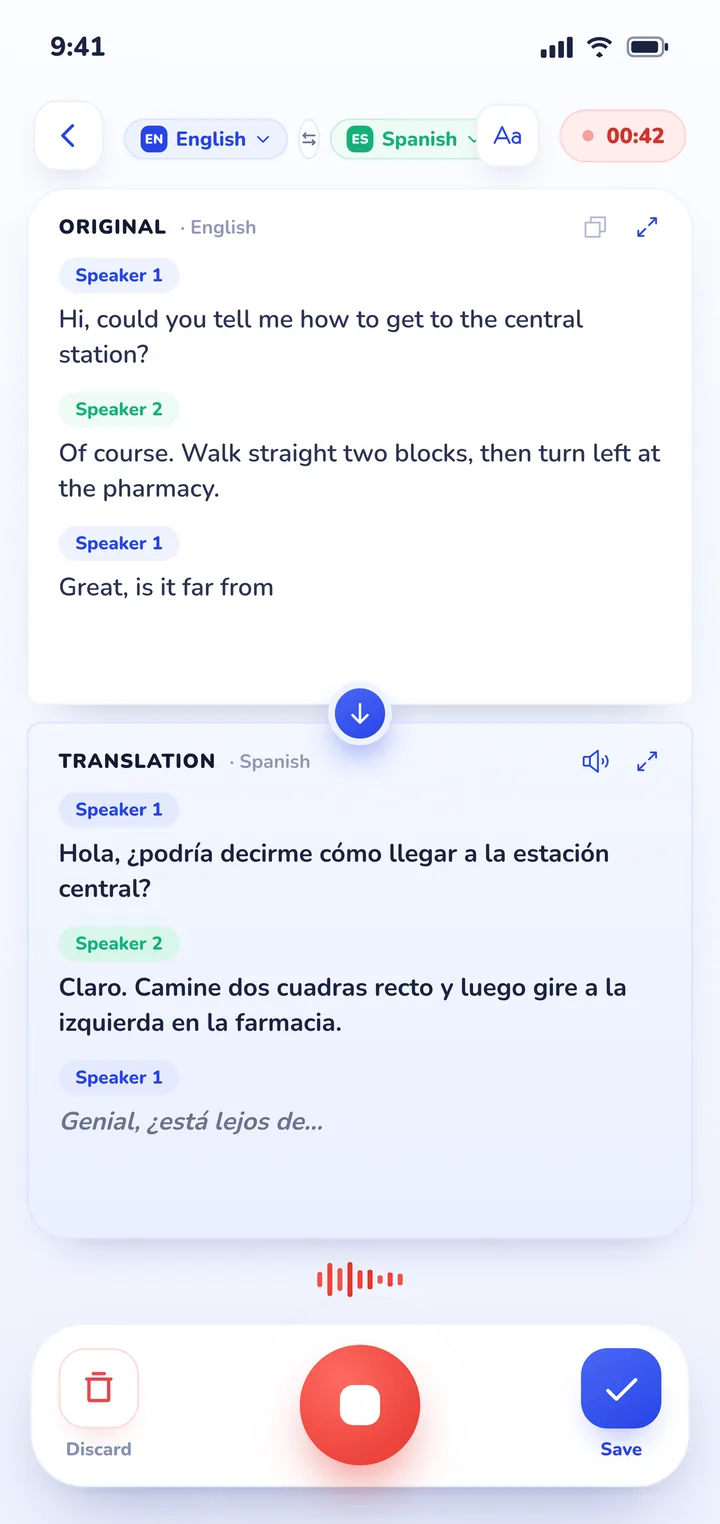
Learn a few phrases yourself, let a conversation app handle the long exchanges so your partner can be part of the conversation instead of its interpreter, and check with your partner beforehand about the family's customs around formality, food and gifts.
When meeting your partner's parents without a shared language, the most useful preparation is a talk with your partner about how to address the parents, food customs, gifts and topics to avoid, plus five or so phrases learned by heart, including their names said correctly. Many languages expect the formal "you" with in-laws at first.
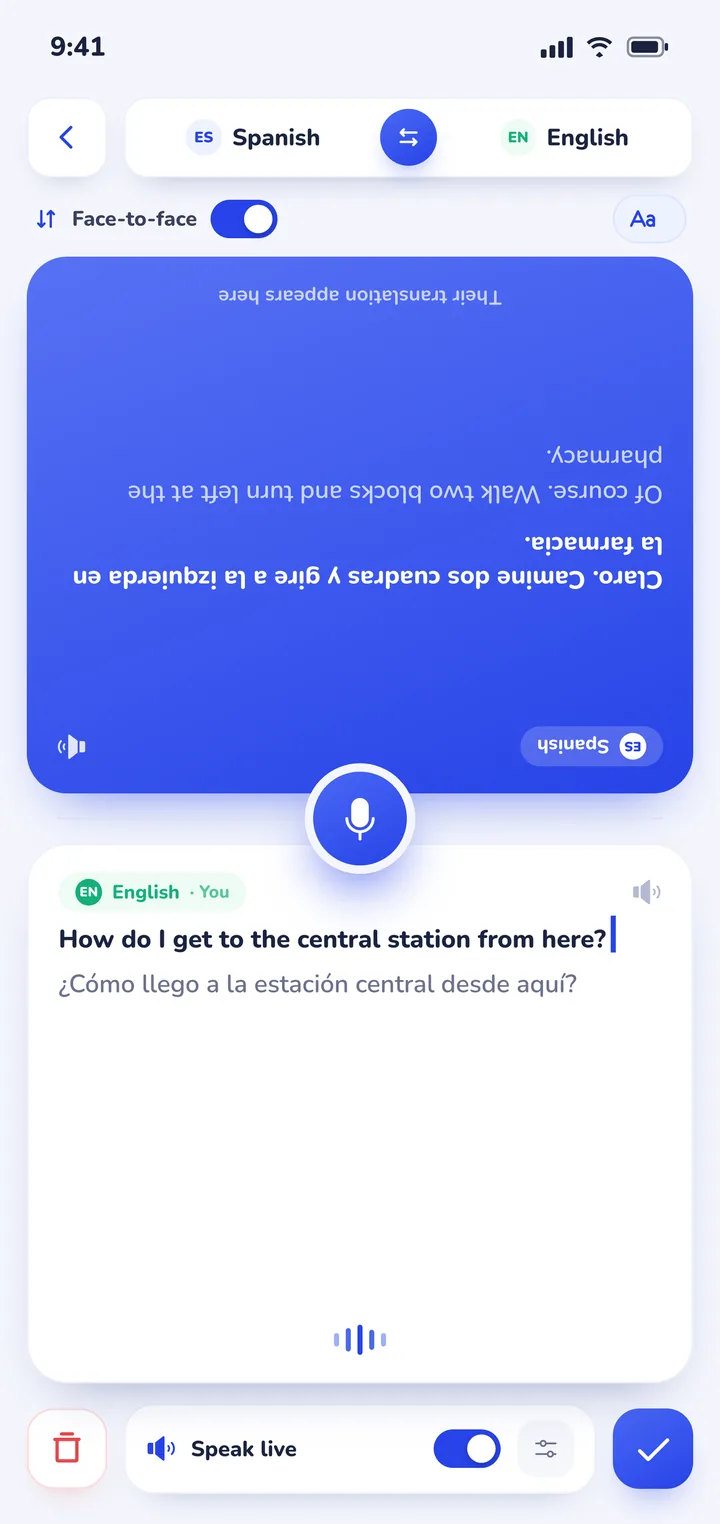
At the table, a conversation app with a split screen, laid flat between you, lets each person read their own language without passing the phone. Your partner can then join the conversation instead of interpreting every sentence, and step in for jokes, family stories and anything where tone matters. Introduce the app first, look at the person rather than the screen, and let pauses happen.
Before the visit: talk to your partner
Your partner knows things no app does. A short conversation before the visit saves the most common mistakes.
- How should you address their parents? By first name, as Mr. and Mrs., or with a family term? In many languages the formal "you" is expected with in-laws, at least at first.
- Are there topics to avoid, or ones that will win you points? A parent's job, a home town, a sports team, a dish they're proud of.
- What about food? In many families refusing a second helping is rude, and in others clearing your plate means you want more.
- Should you bring something, and what? Flowers, sweets or something from your home country are common. Some flowers and colours carry meanings you'll want to avoid.
- Who will translate what? Agree that your partner steps in for jokes and family stories, and the app handles the practical back-and-forth.
Learn a few phrases yourself
Nothing replaces hearing you try. Even five phrases said badly show respect. A good set to learn:
- Hello, it's lovely to meet you.
- Thank you for having me.
- This is delicious.
- Your home is beautiful.
- I'm learning your language, slowly.
Practise them with your partner, and ask them to check your pronunciation of names. Getting a parent's name right matters more than any sentence.
Be careful with words that look familiar. A common example in Spanish is "embarazada", which looks like "embarrassed" but means pregnant. Saying "estoy muy embarazado" to make an apology leads to a very different conversation. If you want to say you're embarrassed in Spanish, say "me da vergüenza". Our guide to Spanish translator apps lists more of these false friends.
Using a translator app without making it awkward
The reason translator apps feel awkward at a family table is usually the method, not the idea. Passing a phone back and forth after every sentence turns a conversation into an interview. A conversation app with a split screen avoids that.
- Introduce it. Ask your partner to explain in their parents' language that you're using an app so you can talk with them directly. Most people are pleased, not put off.
- Set it up before you sit down. Choose the two languages in a split-screen mode, such as Google Translate's face-to-face mode, Apple Translate's Face to Face view, Samsung Interpreter or Clawmium Translate's conversation mode, and check the microphone works.
- Put the phone flat on the table between you. The top half faces them and shows their language, and your half shows yours.
- Talk to them, not the screen. Look at the person while you speak and glance down to read their replies.
- Turn on read-aloud if a parent finds the screen hard to read.
Use the app for the conversation, and let your partner handle what apps do badly: jokes, family history full of names, and anything where tone matters. Our guide to using a conversation translator face to face has more on the etiquette, and our list of apps that translate in real time compares the options.
Things that matter more than perfect translation
- Show interest in their lives. Ask about where they grew up, how they met, what your partner was like as a child.
- Accept food and praise it. In many cultures this is the most important conversation of the evening.
- Offer to help clear the table, even if they refuse.
- Let pauses happen. Silence while someone reads a translation is normal, not a failure.
- Laugh at your own mistakes. When something comes out wrong, the shared laugh often does more for the relationship than a perfect sentence would.
Mistakes to avoid
- Speaking louder or slower in English. It doesn't help, and it can feel condescending.
- Making your partner translate everything. They become a switchboard and nobody gets to talk with them.
- Recording without asking. If you plan to keep the conversation, mention it.
- Using the app for jokes and idioms. "Break a leg" or sarcasm can translate into something strange.
- Arguing through a translator. If a sensitive topic comes up, slow down and let your partner help.
After the first visit
Write down the names, stories and things they cared about while they're fresh, so you have something to ask about next time. Keep learning a few words between visits. Families notice progress, even small progress.
Where Clawmium Translate fits
Clawmium Translate is our app, so weigh this section with that in mind. Its conversation mode splits the screen so each of you reads your own language, and it works out which of the two languages is being spoken. Translations can be read aloud, with a different voice for each speaker, if a parent finds the screen hard to read.
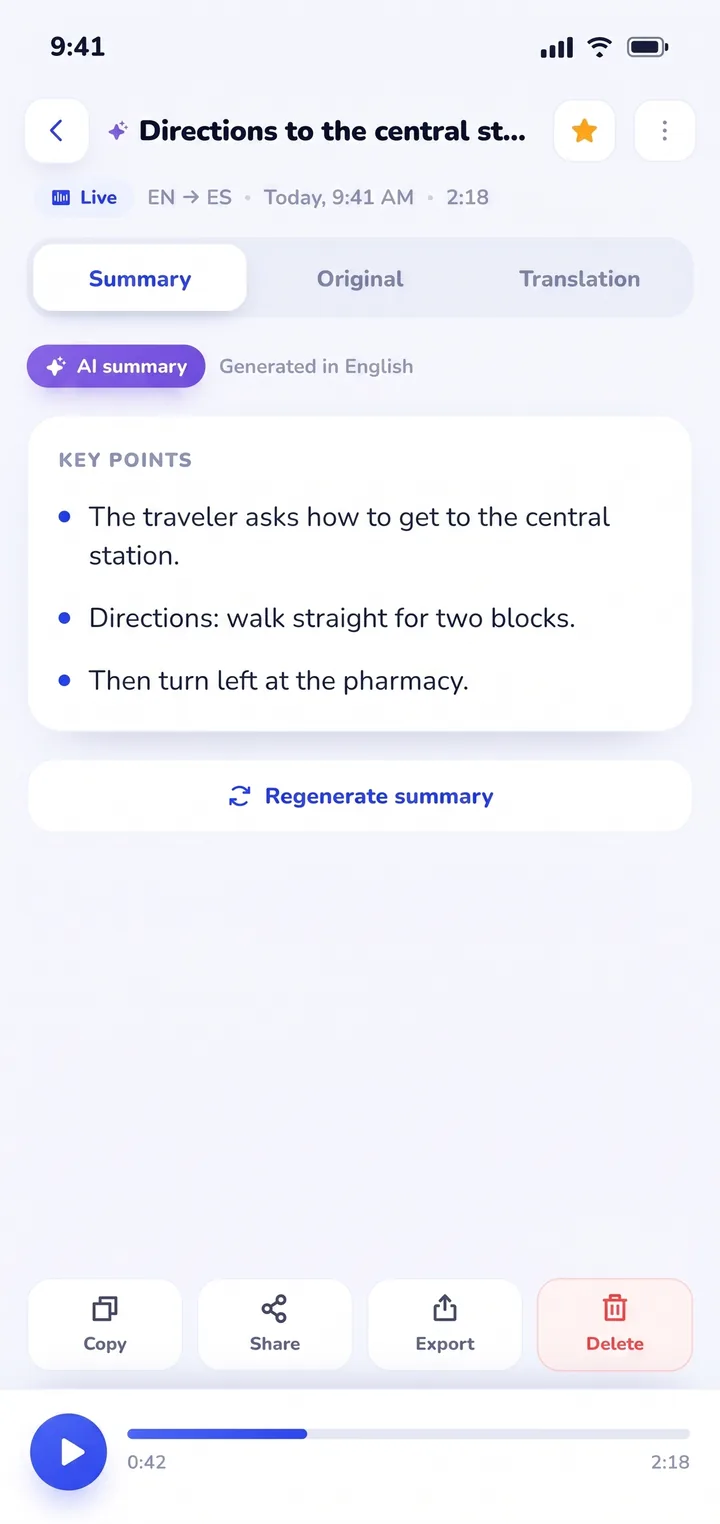
It also saves each conversation on your phone with a transcript in both languages and an AI summary, so after the dinner you can read back the names and stories. It supports more than 60 languages, runs on Android and iPhone, needs an internet connection, and is free to download with a daily allowance and no ads.
Sources
- Wikipedia, T–V distinction (formal and informal "you" across languages) and False friend, checked 3 November 2026.
- Google Translate Help, Hear live speech to speech translations with live translate, and Apple Support, Translate in-person conversations with iPhone, checked 3 November 2026.
Frequently asked questions
How do I talk to in-laws who don't speak English?
Learn a few phrases in their language, agree with your partner how to share translation, and use a conversation app with a split screen for longer exchanges so each person reads their own language.
Is it rude to use a translator app with family?
Usually not, if you introduce it and keep looking at the person rather than the phone. Most families appreciate the effort to talk with them directly.
What should I learn to say to my partner's parents?
Hello, thank you for having me, this is delicious, your home is beautiful, and the correct way to say their names. A few phrases said with effort matter more than fluency.
Can a translator app handle a whole family dinner?
It handles conversation well when people take turns. In a lively group where several people talk at once, accuracy drops, so let your partner help with fast group moments.
Try a live conversation
Free to start. 60+ languages. Each person reads their own language.