Ask for a professional medical interpreter when you book. In the United States and in the NHS in England, health providers are expected to arrange one at no cost to you. Prepare your symptoms, medicines and questions in writing beforehand. Use a translator app for the parts around the appointment, such as reception, the pharmacy and checking your notes afterwards, but not as a replacement for an interpreter when a diagnosis, treatment or consent is being discussed.
The safest way to talk to a doctor in another language is through a professional medical interpreter, in person, by phone or by video. In the United States, hospitals and clinics that receive federal health funding must provide an interpreter in a timely manner and at no cost to patients with limited English, under Section 1557 of the Affordable Care Act and Title VI.
In England, NHS services are expected to provide interpreters free of charge. Family members, and especially children, shouldn't interpret, because they may leave things out or not know the medical terms. Prepare your symptoms, medicines and questions in writing, and repeat back the diagnosis and treatment at the end. A translator app helps around the appointment, at reception, at the pharmacy and for reading notes later, but it shouldn't be the only bridge when a diagnosis, treatment or consent is discussed.
Your right to a free interpreter
Rules differ by country, so check locally, but two of the largest health systems are clear.
United States
Hospitals and clinics that receive federal health funding are covered by civil rights rules, Section 1557 of the Affordable Care Act and Title VI of the Civil Rights Act. The US Department of Health and Human Services has said that when a patient with limited English needs an interpreter at a covered hospital, the hospital must provide one in a timely manner and at no cost to the patient. A relative or friend who speaks some of both languages isn't automatically considered qualified.
England (NHS)
Healthwatch, the independent champion for NHS patients, says you should never have to pay for interpreting, and that it's your healthcare provider's job, not yours, to arrange an interpreter for GP and hospital appointments. It also says children shouldn't be used to interpret health information.
Everywhere else
Many countries offer some kind of interpreting service in public healthcare, often by phone or video. If you're travelling, your travel insurer's assistance line can often find a clinic with staff who speak your language. Ask before the appointment, not at the desk.
Why family members shouldn't interpret
It's tempting to bring a bilingual relative, and for booking or small talk that is fine. During the consultation itself it causes problems. Relatives soften bad news, skip details they find embarrassing, add their own opinions, and rarely know medical terms in both languages. Children face all of that plus a burden they shouldn't carry. A trained interpreter translates everything, stays neutral and keeps what they hear confidential.
Before the appointment
- Ask for an interpreter when you book, name your language and dialect, and ask for a longer slot. Interpreted appointments take more time.
- Write down your symptoms: what, where, since when, how bad, and what makes it better or worse.
- List your medicines, doses and allergies. Bring the packets or take photos of the labels.
- Write your three most important questions, so they don't get lost if the appointment runs short.
- If you prepare these notes in your own language, translate them in advance with a text or camera translator and bring both versions. The doctor can read the translation, and the interpreter can check it.
During the appointment
- Look at the doctor and speak to them directly, as if there were no interpreter: "My chest hurts when I climb stairs", not "Tell him my chest hurts".
- Use short sentences and pause so the interpreter can keep up. The same habits help with an app, as our guide to using a conversation translator face to face explains.
- If you don't understand, say so. Don't nod along.
- At the end, repeat back what you understood in your own words: the diagnosis, the treatment, and when to come back. Doctors call this teach-back, and it catches misunderstandings before you leave.
- Ask for the medicine names, doses and next steps in writing.
Where a translator app helps, and where it shouldn't be trusted alone
Live translation apps have become good enough for everyday conversation, and medical visits include plenty of that. They are useful for:
- Reception and admin: registration, insurance questions, finding the right room.
- The pharmacy: confirming which medicine you're collecting and when to take it.
- Small follow-up questions when the interpreter has left, such as asking a nurse where to wait.
- Travel situations where no interpreter is available and the problem is minor. Our list of apps that translate in real time notes which ones work without internet.
- Keeping a record. An app that saves the conversation lets you read it again at home and share it with family who couldn't be there.
They shouldn't be the only bridge when a diagnosis, a treatment plan, surgery or consent is being discussed. Medical terms, drug names and numbers are exactly where machine translation is most likely to slip, and a slip there matters. In an emergency, call your local emergency number. Say the name of your language in English; many emergency services can bring a telephone interpreter onto the call.
Using Clawmium Translate around an appointment
Clawmium Translate is our app. Here's how it fits the uses above:
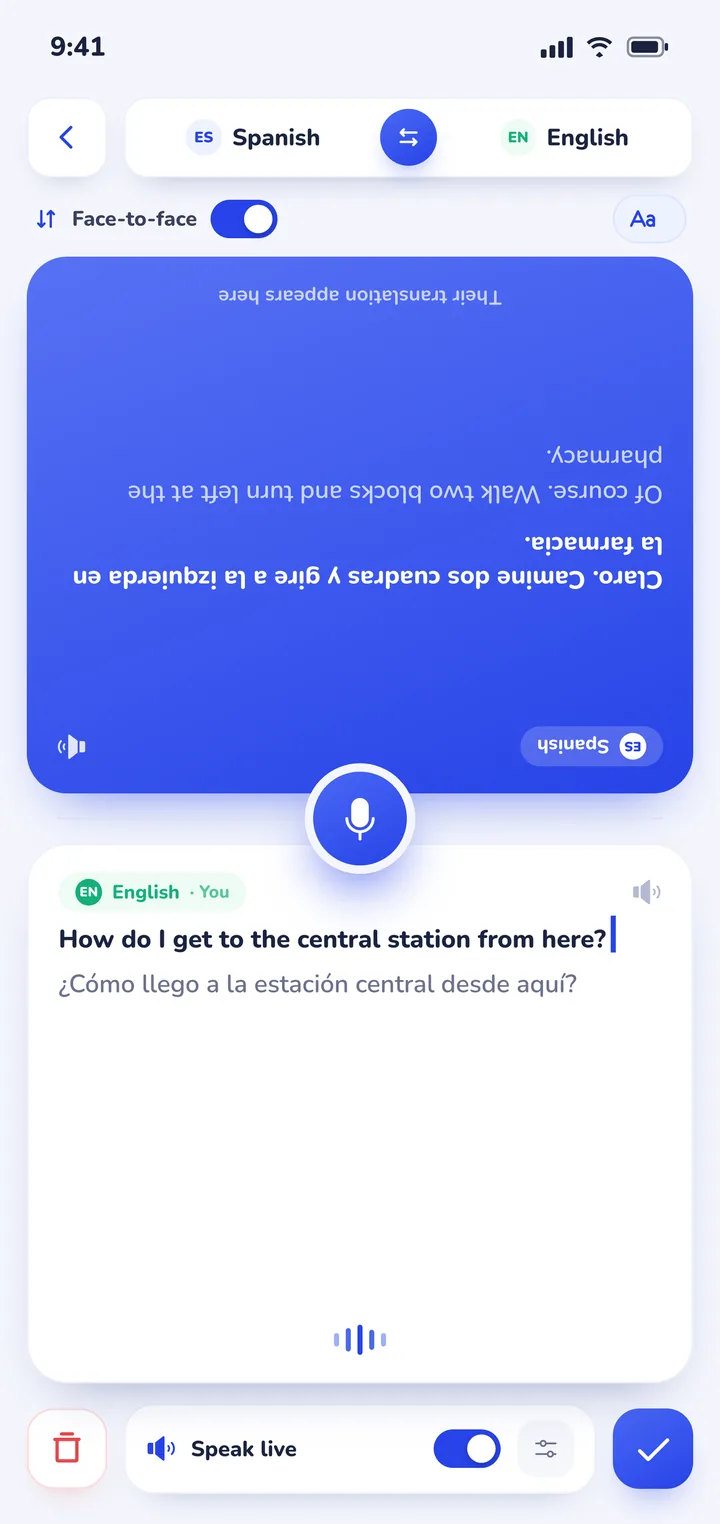
- Face-to-face mode splits the screen (Google Translate's conversation mode has one too), so the receptionist or pharmacist reads your words in their language while you read theirs in yours.
- Read-aloud speaks each translation, which helps when the other person can't easily look at your screen.
- Camera translation reads medicine packets, forms and signs.
- Each session is saved on your phone with the transcript in both languages and an AI summary, so you can check later what was said and share it with family.
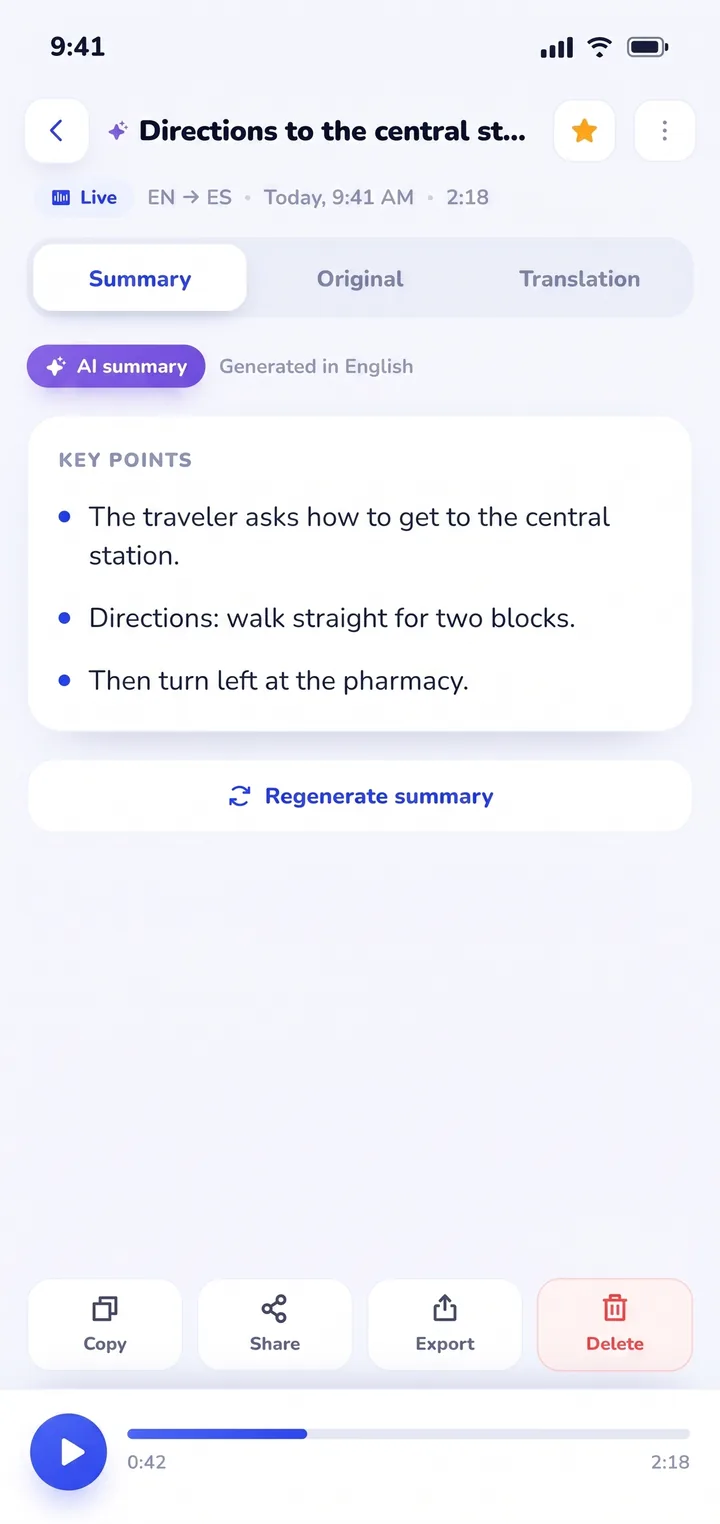
Two things to know for medical use. Sessions are stored on your phone, not on our servers, but the audio is sent to a speech recognition provider to be transcribed and translated, so don't use it where your clinic's privacy rules say not to. And it needs an internet connection. It's on Android and iPhone, free to download with a daily allowance.
For a practical breakdown of how to capture live spoken consultations, scan prescription labels, and review saved summaries, read our dedicated guide to translator apps for doctor appointments.


Sources
- US Department of Health and Human Services, Office for Civil Rights, letter on language access under Section 1557.
- Healthwatch England, Does the NHS provide an interpreter?, updated 2 July 2025.
This guide is general information, not medical or legal advice.
Frequently asked questions
Do I have to pay for a medical interpreter?
In the US, hospitals and clinics that receive federal health funding must provide interpreters at no cost to the patient. In England, Healthwatch says NHS patients should never pay for interpreting. Elsewhere, ask your provider in advance.
Can my child or a family member interpret at the doctor?
It's best avoided for the consultation itself. Healthwatch says children shouldn't interpret health information, and US guidance says a relative who speaks both languages isn't automatically a qualified interpreter. Family can still help with booking and getting there.
Can I use a translator app at the doctor?
For reception, the pharmacy and small questions, yes, and an app that saves the conversation helps you review it later. For a diagnosis, treatment or consent, ask for a professional interpreter as well.
How do I ask for an interpreter?
Ask when you book the appointment. Say which language and dialect you speak and ask for extra time. If nobody offers one at the appointment, ask again at the desk before you go in.
What should I bring to an appointment in another language?
Written notes of your symptoms, a list of your medicines and allergies (or the packets themselves), your top questions, and translations of those notes if you prepared them in your own language.
Try a live conversation
Free to start. 60+ languages. Each person reads their own language.